Skip to main content
अन्वेषण Explore
![Shree Rama]()
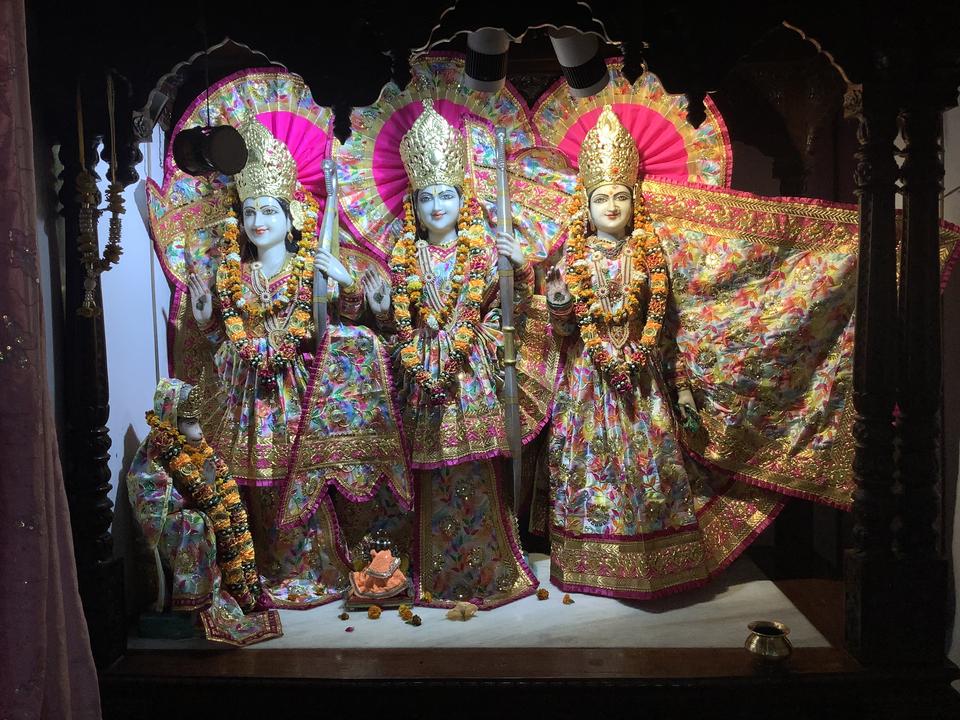
Other Names: Ramachandra, Raghunandan, Dasharathi, Maryada Purushottam, Kodandaram. Festivals Associated: Ram Navami – Celebrates his divine birth Diwali – Marks his return to Ayodhya and the triumph of light over darkness Vijayadashami (Dussehra) – Celebrates his victory over Ravana Hanuman Jayanti and Sita Navami – Connected to those who shared in his divine mission Symbolism: Lord Ram is the seventh avatar of Lord Vishnu, representing the ideal man, ideal king, ideal husband, and ideal son. He embodies truth, duty (dharma), justice, humility, and unwavering morality. Known as Maryada Purushottam, he is the model of perfect conduct and a guiding light for individuals and rulers alike. His life, as depicted in the Ramayana , is a blueprint of righteous living, where decisions are based not on personal comfort but on upholding higher moral principles. Legends and Stories: Born in Ayodhya to King Dasharatha and Queen Kaushalya, Ram is the firstborn of four brothers—Lakshman, Bharat, and Shatrughna. At a young age, he broke the divine bow of Lord Shiva to win the hand of Sita, incarnation of Goddess Lakshmi. His life took a dramatic turn when, on the eve of his coronation, he was exiled to the forest for 14 years due to a promise his father had made to Queen Kaikeyi. During his exile, Sita was abducted by Ravana, the demon king of Lanka. With the help of Hanuman, Lakshman, and an army of Vanaras (monkey warriors), Ram waged war against Ravana and emerged victorious. Upon his return to Ayodhya, he was crowned king, ushering in the legendary era of Rama Rajya—an age of peace, justice, and prosperity. Yet, even in victory, Ram endured pain and sacrifice, including the difficult decision to part from Sita to uphold public trust. His story reflects the supreme commitment to dharma, even above personal emotion.
 13
 4
![Shree Ganesha]()
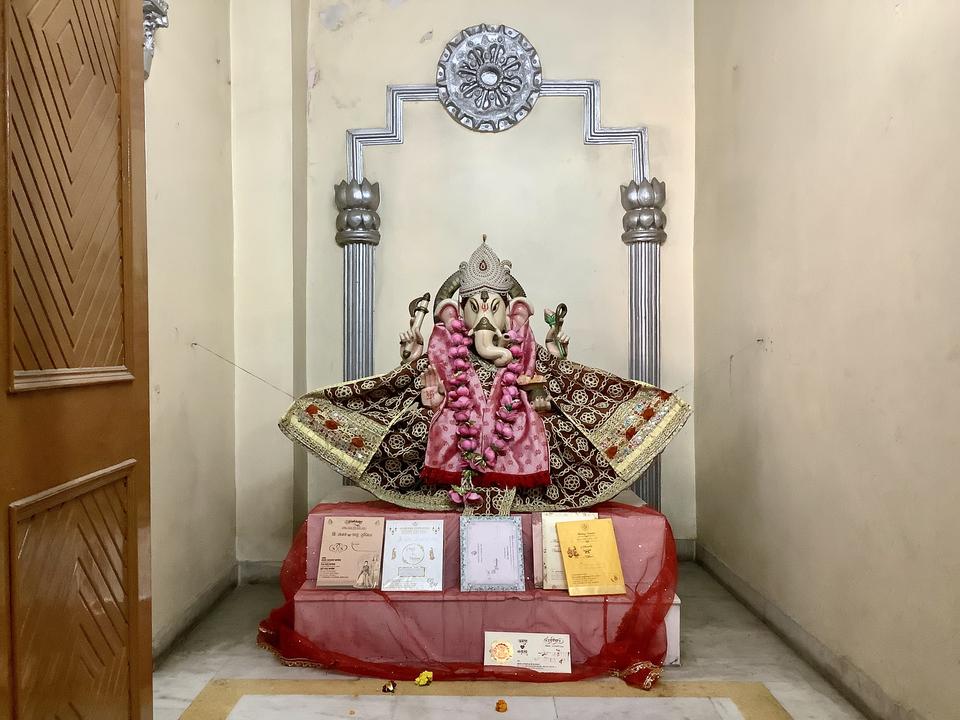
Other Names: Ganapati, Vinayaka, Vighnaharta, Lambodara, Ekadanta, Gajanana Festivals Associated: Ganesh Chaturthi – Celebrated with grand processions, pujas, and immersions (Visarjan) Sankashti Chaturthi – Monthly fast observed for removal of obstacles Vinayaka Chaturthi (in Tamil Nadu and Andhra Pradesh) – Regional observance of his blessings Ganapati Homams and Pujas – Performed before new ventures, exams, weddings, and travel. Symbolism: Shree Ganesha is the god of wisdom, prosperity, and new beginnings, and is always worshipped first before any ritual or undertaking. With the head of an elephant and a pot-bellied human body, he represents intellect, strength, humility, and balance. His large ears symbolize deep listening, small eyes focus, and his vehicle—the mouse (Mushika)—symbolizes control over desires and ego. Ganesha teaches that true success lies in wisdom, humility, and devotion. Legends and Stories: Born to Goddess Parvati and Lord Shiva, Ganesha was created from Parvati’s divine energy to guard her chamber. When Shiva unknowingly returned and was denied entry, a battle ensued, and Shiva beheaded the boy in anger. Upon realizing the truth, he resurrected Ganesha by placing an elephant’s head on his body and declared him the foremost of all gods—Vighneshwar, the remover of obstacles. Another legend explains Ganesha’s broken tusk, which he sacrificed to write the Mahabharata as Sage Vyasa dictated it. He agreed to write without pause, showing his immense intellect and dedication. Ganesha is also the brother of Kartikeya (Skanda) and is revered in both Shaivite and Ganapatya traditions. He is worshipped not just as a deity of wealth and fortune, but as the guardian of dharma, the destroyer of ego, and the gateway to spiritual success.
9
4
![Goddess Annapurna]()
Other Names: Annapoorna Devi, Annapurneshwari, Vishweshwari, Devi Annalakshmi Festivals Associated: Annapurna Jayanti – Celebrated on Margashirsha Purnima (December), commemorating her appearance Navratri – Worshipped during Durga’s manifestations Annadan Seva Days – Community feasting and food donations in her honour Diwali (Annakut) – A mountain of food is offered to her along with other deities Symbolism: Goddess Annapurna is the Hindu goddess of food, nourishment, and abundance, revered as a form of Parvati, consort of Lord Shiva. Her name means “Anna” (food) and “Purna” (full or complete), reflecting her role as the provider of nourishment to all beings. She represents the sacred act of feeding, not just as a physical necessity but as an expression of divine love and compassion. Annapurna is the source of prosperity and health, reminding us that sharing food is a sacred duty and that divine grace sustains all life. Legends and Stories: According to a legend from the Shiva Purana , Lord Shiva once remarked to Parvati that the material world, including food, was an illusion ( maya ). Deeply offended, Parvati vanished from the world, causing famine and hunger to spread. As creation began to wither, Shiva realized the significance of nourishment and humbly prayed for her return. Parvati then reappeared as Annapurna, offering food to Shiva and thus restoring balance to the universe. In another tale, she is worshipped as Vishweshwari, the goddess of Kashi, who provides food to all beings and guards the city’s spiritual order. Her temple is located close to Kashi Vishwanath, symbolizing that even Lord Shiva depends on her grace for sustenance. She is also associated with Annalakshmi, the giver of plenty and contentment. Worship of Annapurna emphasizes the importance of gratitude, humility, and sharing. It is believed that serving food to others in her name brings immense merit and spiritual fulfilment.
7
4
![Gauri Shankar]()
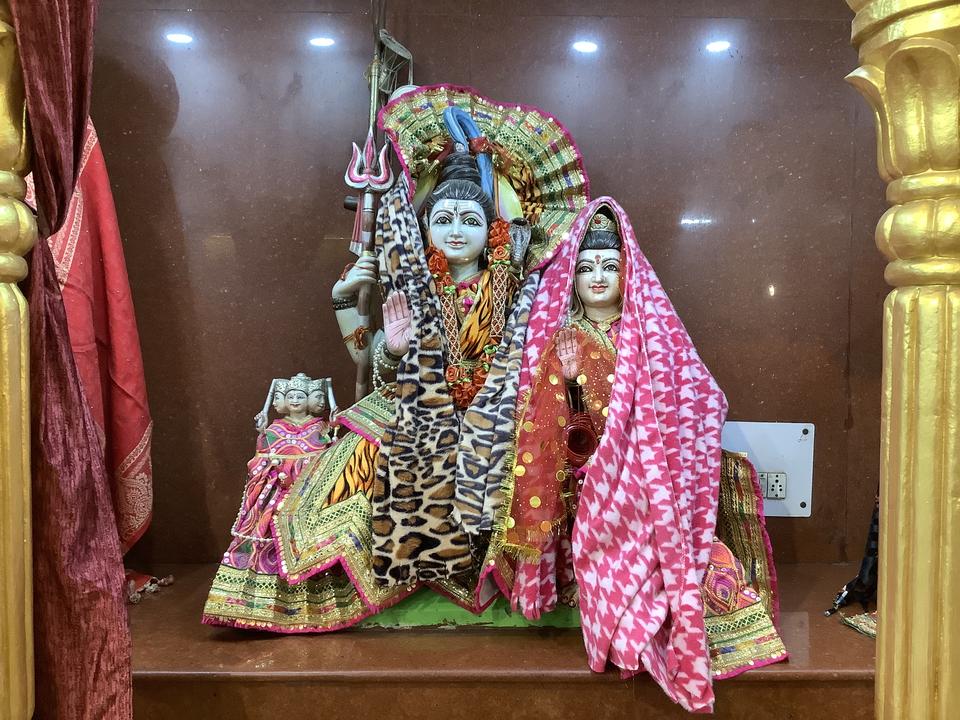
Other Names: Uma Maheshwara, Ardhanarishvara (symbolic form), Shiv-Parvati, Ishwar-Ishwari Festivals Associated: Mahashivratri – Commemorates their divine union Teej & Gangaur – Celebrated by women for marital devotion and blessings Gauri Shankar Vivah (during Navratri or Phalgun) – Worshipped by those seeking a harmonious marriage Shravan Maas – Mondays dedicated to Shiva and Parvati worship Symbolism: Gauri Shankar represents the divine union of Lord Shiva and Goddess Parvati, symbolizing the perfect balance of masculine and feminine energy, power and compassion, detachment and devotion. Worshipped together, they embody marital harmony, cosmic creation, and spiritual unity. This union is not just of two deities but of Shiva (consciousness) and Shakti (energy)—the foundation of the universe. Their combined presence blesses couples with love, fertility, and peace, and inspires seekers to unite inner awareness with active life. Legends and Stories: According to sacred texts, Parvati (Gauri) performed intense penance to win the love and union of Shiva, who was absorbed in meditation. Her devotion melted Shiva’s ascetic heart, and their union became the basis of all creative force. This sacred marriage is celebrated as Gauri Shankar Vivah, symbolizing divine love and spiritual partnership. Together, they gave birth to Lord Ganesha and Kartikeya and are often depicted as a family. The form of Ardhanarishvara (half Shiva, half Parvati) represents their inseparable nature. Their story teaches that divinity lies in union, not separation—and that strength and gentleness must walk together.
7
3
![Santoshi Mata]()
Other Names: Santoshi Maa, Mata Santoshi, Goddess of Satisfaction and Contentment Festivals Associated Santoshi Mata Vrat – observed on Fridays, especially on the 16th consecutive Friday, by fasting and prayer Navratri – she is worshipped as part of the nine forms of the Goddess during Navratri Many devotees perform special pujas and offer jaggery and chickpeas to please her. Symbolism: Santoshi Mata embodies contentment, patience, and satisfaction—the inner peace that brings happiness regardless of external circumstances. She symbolizes the power of faith and devotion in overcoming difficulties and attaining harmony in family and life. Worship of Santoshi Mata encourages acceptance and gratitude, leading to spiritual and material prosperity. Legends and Stories: Santoshi Mata’s origin is rooted in folk belief and devotion, rather than in ancient scriptures, yet her presence is powerful in homes and hearts across India. She is often regarded as the daughter of Lord Ganesha, born from his divine aura to spread contentment and peace. Her worship gained immense popularity in the 20th century, particularly after the 1975 devotional film "Jai Santoshi Maa" , which portrayed her as a quick-to-bless, compassionate mother. The film tells the story of Satyavati, a poor but faithful woman tormented by her in-laws. Through unwavering devotion and the observance of Santoshi Mata’s vrat (Friday fast)—offering jaggery and gram while avoiding sour food—Satyavati overcomes hardship and is reunited with her husband. This tale symbolizes the triumph of faith, humility, and patience. Another legend describes how Santoshi Mata was tested by other goddesses, but proved her spiritual greatness through her connection with the common devotee. Despite having no mention in early Vedic or Puranic texts, her reach spread rapidly through oral tradition, temple worship, and simple rituals. Today, she is seen as a guardian of household peace and a divine friend to those in emotional or financial distress.
4
3
![Dwarkadheesh]()
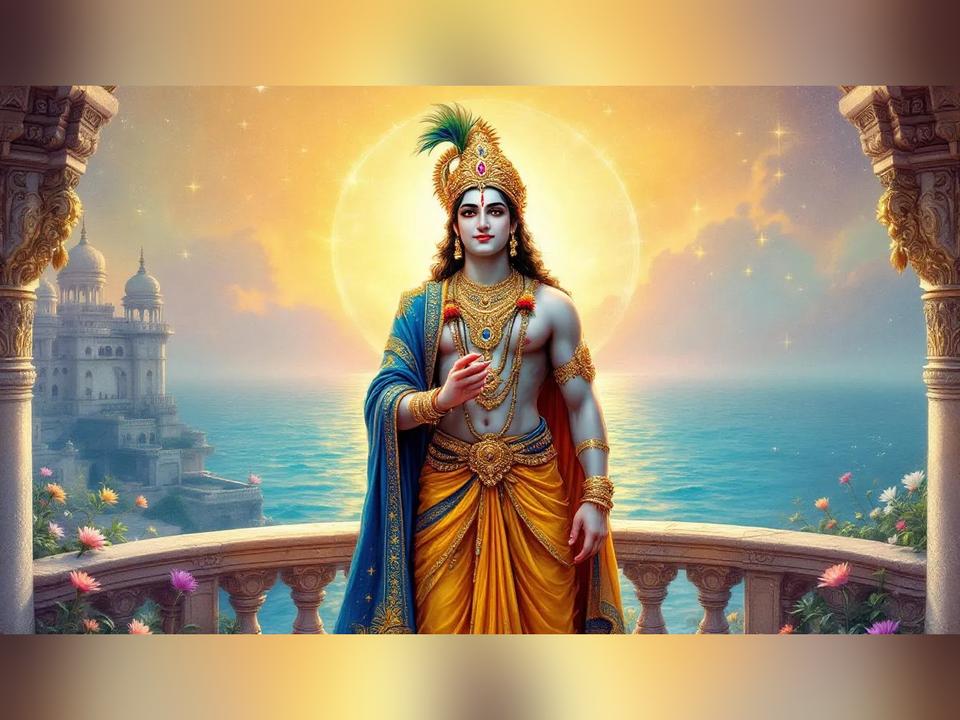
Other Names: Ranchhodraiji, Vasudeva, Kanha, Murlidhar, Shyam Sundar Festivals Associated: Janmashtami – Krishna’s birth celebration Rukmini Vivah – Commemorates his divine wedding to Goddess Rukmini Annakut (Govardhan Puja) – Offering of food after Diwali Holi & Sharad Purnima – Celebrated with joy and devotion in Dwarka Symbolism: Dwarkadhish is Lord Krishna in his royal and divine protector form, worshipped as the king of the ancient city of Dwarka. While Krishna is celebrated for his childhood Leela’s and teachings in the Bhagavad Gita , as Dwarkadhish, he represents dharma, diplomacy, leadership, and divine sovereignty. Clad in regal attire and adorned with a crown, Krishna as Dwarkadhish symbolizes wisdom in action, love through governance, and balance between power and humility. He teaches that true leadership lies in service, and true divinity in righteousness. Legends and Stories: After his time in Mathura and Vrindavan, Krishna founded the kingdom of Dwarka to establish a peaceful and just society, far from the chaos of dynastic conflict. Dwarka became a model kingdom, ruled by Krishna with compassion and wisdom. As a statesman, he prevented wars, guided the Pandavas during the Mahabharata, and acted as a charioteer to Arjuna on the battlefield of Kurukshetra. It is said that after his earthly duties were complete, Krishna left his body in Dwarka, and the city was eventually submerged by the sea. Archaeological evidence and scriptural records both point to Dwarka as one of the oldest submerged cities in the world, confirming its mythic status.
4
4
![Lord Shiva]()
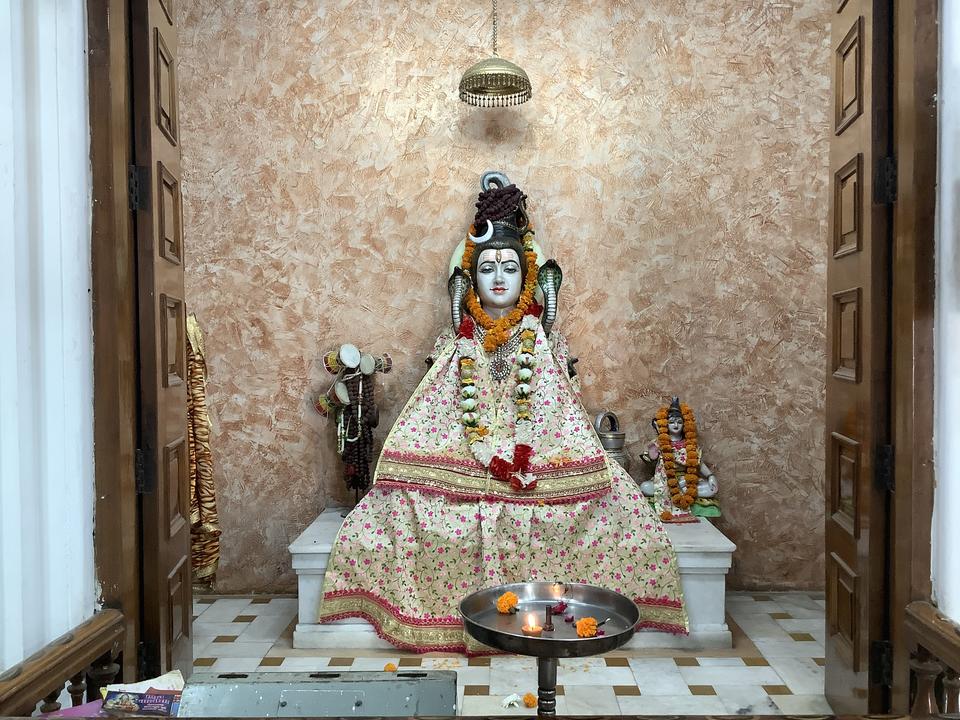
Other Names: Mahadeva, Shankar, Bholenath, Rudra, Neelkanth, Pashupati, Shambhu, Nataraja. Festivals Associated: Mahashivratri – The grand night of Shiva, symbolizing his cosmic dance and divine union Shravan Maas – A month-long worship period especially sacred for Shiva devotees Pradosham – Fortnightly observance for purification and spiritual upliftment Kartik Purnima & Mondays (Somwar) – Highly auspicious days for Shiva worship Symbolism: Lord Shiva is the destroyer and regenerator in the Trimurti (Brahma–Vishnu–Mahesh). He embodies duality and transcendence—both fierce and gentle, ascetic and householder, formless and manifest. His matted hair holds the Ganga River, signifying purification; his blue throat (Neelkanth) reflects compassion, as he drank the Halahala poison during Samudra Manthan. The third eye symbolizes supreme consciousness and inner awakening, while his seated posture on Mount Kailash depicts eternal meditation and detachment. Shiva’s dance as Nataraja illustrates the cosmic cycles of creation, preservation, and dissolution—he is the timeless energy behind all transformation. Legends and Stories: One of the most well-known stories is that of Samudra Manthan, where Shiva drank the deadly poison that emerged during the churning of the cosmic ocean, protecting all creation. This earned him the name Neelkanth (blue-throated one). Shiva married Parvati, who is considered his Shakti (power). Together, they are the ideal balance of energy and consciousness, and parents to Ganesha and Kartikeya. He is also known as Bholenath, the innocent lord who is easily pleased by sincere devotion, and as Rudra, the fierce form who destroys evil and ego. Shiva is worshipped in both anthropomorphic form and as the Shivling, a symbol of infinite consciousness. He resides in Kailash, symbolizing spiritual elevation, and is revered by ascetics, yogis, householders, and kings alike.
3
1
![Surya Dev]()
Other Names: Aditya, Bhanu, Ravi, Mitra, Arka, Savita, Martanda Festivals Associated: Makar Sankranti – Celebrates Surya’s transition into Capricorn; a festival of light and harvest Chhath Puja – A major North Indian festival devoted solely to Surya and his consort Usha Ratha Saptami – Symbolizes the chariot of the Sun moving across the sky Pongal (Surya Pongal) – Celebrated in South India as a thanksgiving to the Sun Symbolism: Surya Dev is the Hindu god of the sun, representing light, truth, vitality, and spiritual consciousness. As the giver of life, he illuminates the world and the soul. Surya is the visible form of God, praised in the Vedas as the source of all energy, and is one of the Navagrahas (nine planetary deities). His rising each day is symbolic of hope, discipline, and the triumph of light over darkness. Worship of Surya energizes the mind and body, removes ignorance, and brings clarity and healing. Legends and Stories According to the Vedas, Surya is the son of Kashyapa Rishi and Aditi, and the leader of the Adityas—a group of solar deities. He rides a chariot drawn by seven horses, representing the seven colors of light or the seven days of the week, and is driven by Aruna, the charioteer of dawn. In the Ramayana, Surya is the father of Lord Sugriva. In the Mahabharata, Surya is the father of Karna, born to Kunti through a boon granted by Sage Durvasa. Karna inherited his strength and radiant aura from Surya himself. Surya is also credited with imparting the original Surya Namaskar (sun salutation) and sacred texts like the Surya Siddhanta and Aditya Hridaya Stotra, which Lord Rama was advised to recite before defeating Ravana. He is regarded as a spiritual guru and is worshipped in many yogic and Vedic traditions.
2
1
![Goddess Chamunda]()
Other Names: Chamundeshwari, Charchika, Rakta Chamundi, Chamundi Mata Festivals Associated: Navratri (especially Ashtami and Navami days) – Worshipped as a fierce form of Durga Durga Puja – Invoked during Chandi Path and tantric rituals Chamunda Jayanti – Celebrated in certain regions with night-long chanting and offerings Kulashekara and tribal rituals – Dedicated festivals in tribal areas of Himachal and Odisha Symbolism: Goddess Chamunda represents the terrifyingly fierce aspect of Devi Durga, embodying the power to destroy evil and protect cosmic order. She is the form of Mahashakti who arises in battle, unrelenting and untamed, yet deeply protective of her devotees. Often depicted standing over corpses or seated on a corpse (symbolizing conquest over death and ignorance), she is associated with cremation grounds, fearlessness, spiritual transformation, and tantric worship. Chamunda symbolizes ultimate courage, reminding devotees that confronting darkness—within and without—is the path to liberation. Legends and Stories: Chamunda appears in the Devi Mahatmya (part of the Markandeya Purana ), where she emerges from the eyebrows of Kali or Durga during a cosmic battle. When the twin demon generals Chanda and Munda wreak havoc on the heavens, it is Chamunda who slays them both, earning the name Chamunda. Her image, fierce and blood-soaked, is not a symbol of terror but of divine justice and the cleansing fire of truth. She is often worshipped in tantric traditions, especially in remote or forest temples, where her power is believed to protect from disease, spiritual obstacles, and black magic. While fearsome in appearance, she is considered compassionate to her devotees, offering protection, strength, and deep spiritual insight.
2
1
![Valmiki]()
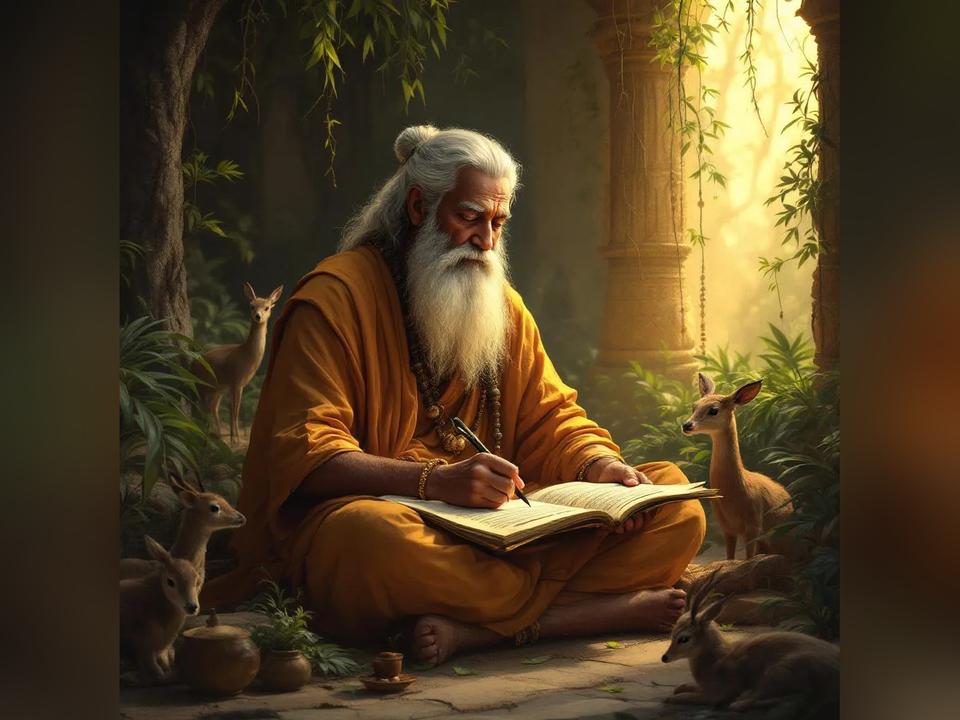
Other Names Maharishi Valmiki, Adi Kavi (The First Poet), Rama-kavi, Bala Kavi Festivals Associated Valmiki Jayanti – celebration of Maharishi Valmiki’s birth, marked by Ramayana recitations and devotional events Literary festivals and bhajans dedicated to his works are held on this day. Symbolism Valmiki symbolizes transformation and redemption—rising from a bandit to a great sage through devotion and penance. He represents the power of repentance, wisdom, and the eternal truth of dharma. As the Adi Kavi, he laid the foundation of Sanskrit epic poetry and taught that anyone can transcend their past through sincere effort and divine grace. Legends and Stories Valmiki’s life is a profound tale of transformation. Originally, he was Ratnakara, a ruthless bandit who would rob and plunder travelers to support his family. One day, the sage Narada confronted him, asking if his family would share the burden of his sins. When they refused, Ratnakara was struck by remorse and decided to seek forgiveness through intense meditation. He sat by the banks of the Tamasa River and repeated the name of Lord Rama continuously. His meditation was so deep that an anthill (Valmika in Sanskrit) grew around him, which is how he got the name Valmiki. After years of penance, he attained enlightenment and became a great sage. Valmiki is revered as the Adi Kavi, or the first poet, because he composed the Ramayana—the first epic poem in Sanskrit—detailing the life, struggles, and virtues of Lord Rama. It is said that the first verse (shloka) of Sanskrit poetry was born from his meditation. Valmiki also played a key role in sheltering Sita, Lord Rama’s wife, during her exile and taught her twins, Lava and Kusha, the Ramayana. His story exemplifies that through devotion, repentance, and perseverance, even the most fallen can reach the heights of spiritual greatness.
2
1
![Maa Saraswati]()
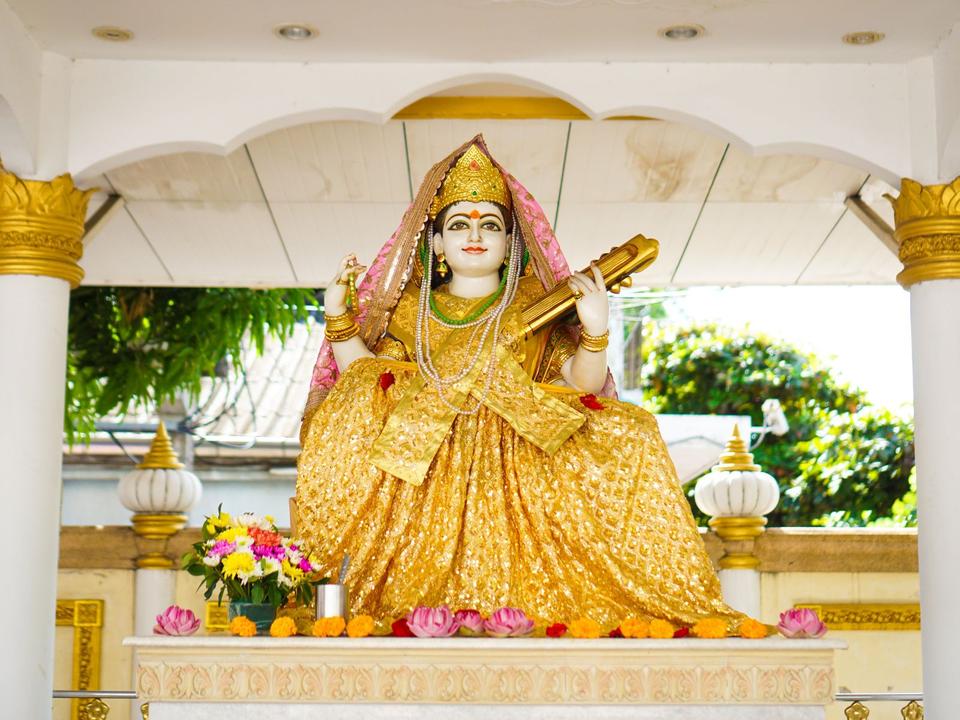
Other Names: Sharada, Vagdevi, Bharati, Mahavidya, Veenapani, Brahmacharini. Festivals Associated: Vasant Panchami (Saraswati Puja) – Celebrated on Magha Shukla Panchami, marking her divine appearance Navratri (Day 6–9) – In South India, she is worshipped during the final days of Navratri Saraswati Avahan and Visarjan – Celebrated in Bengal and eastern India during Durga Puja Ayudha Puja – Books and instruments are offered at her feet in gratitude Symbolism: Maa Saraswati is the goddess of knowledge, music, wisdom, learning, and speech. She is the divine consort of Lord Brahma, and the mother of the Vedas. Seated on a white lotus or swan, dressed in pure white, she symbolizes truth, purity, and clarity of thought. Her veena produces the music of creation, her book holds eternal wisdom, and her rosary signifies concentration and spirituality. Saraswati teaches that true beauty lies in knowledge, and true knowledge leads to liberation (moksha). Legends and Stories: According to the Puranas, Maa Saraswati emerged from Lord Brahma’s mind when he sought to organize creation through speech, thought, and wisdom. She helped give form to the cosmos, language, intellect, and the arts, making her the guiding force behind all learning and expression. In the Rigveda , she is described as the mighty river goddess who purifies and nourishes, both physically and spiritually. In another tale, she once withheld her speech to prevent the asuras from misusing sacred mantras, highlighting her role as the protector of sacred knowledge. Saraswati is invoked by students, artists, musicians, poets, and scholars, and is worshipped to overcome ignorance, forgetfulness, and confusion. In many traditions, she is seen as part of the Tridevi (alongside Lakshmi and Durga), representing sattva guna (purity and clarity).
1
0
![Mahabali Hanuman]()
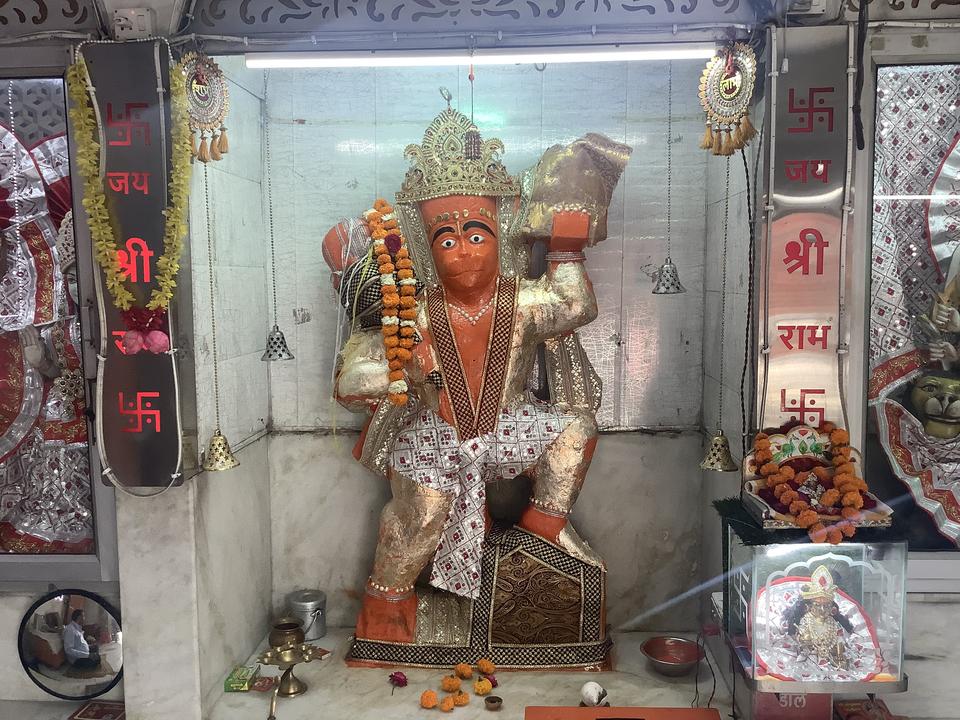
Other Names: Anjaneya, Maruti, Bajrangbali, Pavan Putra, Sankat Mochan, Rudra Avatar Festivals Associated: Hanuman Jayanti – Celebrated on Chaitra Purnima , marking his birth Ram Navami – Hanuman is worshipped alongside Lord Rama Hanumantha Vrata – Observed in South India for strength and prosperity Tuesdays & Saturdays – Dedicated days for Hanuman worship across India Symbolism: Lord Hanuman is the ultimate symbol of devotion (bhakti), loyalty, and divine power. He is believed to be an incarnation of Lord Shiva and the son of Vayu (wind god), giving him unmatched speed, strength, and courage. As a Chiranjivi (immortal), he lives eternally, serving and protecting the righteous. His humble nature, despite immense power, teaches that true greatness lies in humility and surrender. Hanuman is also the remover of obstacles ( Sankat Mochan ) and is worshipped for courage, health, protection, and wisdom. Legends and Stories: Born to Anjana and Kesari, Hanuman was blessed by Vayu Dev with the power to fly and change form. As a child, he mistook the sun for a fruit and flew to grab it, showing his divine strength. He became the most devoted servant of Lord Rama in the Ramayana . Hanuman played a crucial role in Rama’s victory over Ravana—he leapt across the ocean to find Sita in Lanka, burned down a part of Ravana’s city, carried the Sanjeevani mountain to revive Lakshmana, and showed unwavering faith through all trials. In the Mahabharata , he also appeared before Bhima (his brother, both sons of Vayu), humbling his pride. Hanuman vowed to remain in the flag of Arjuna’s chariot, thus being present during the Bhagavad Gita’s revelation. Hanuman’s love for Rama is eternal , and he is said to dwell wherever Rama’s name is chanted . Devotees worship him for strength, protection from evil, and spiritual wisdom.
1
0